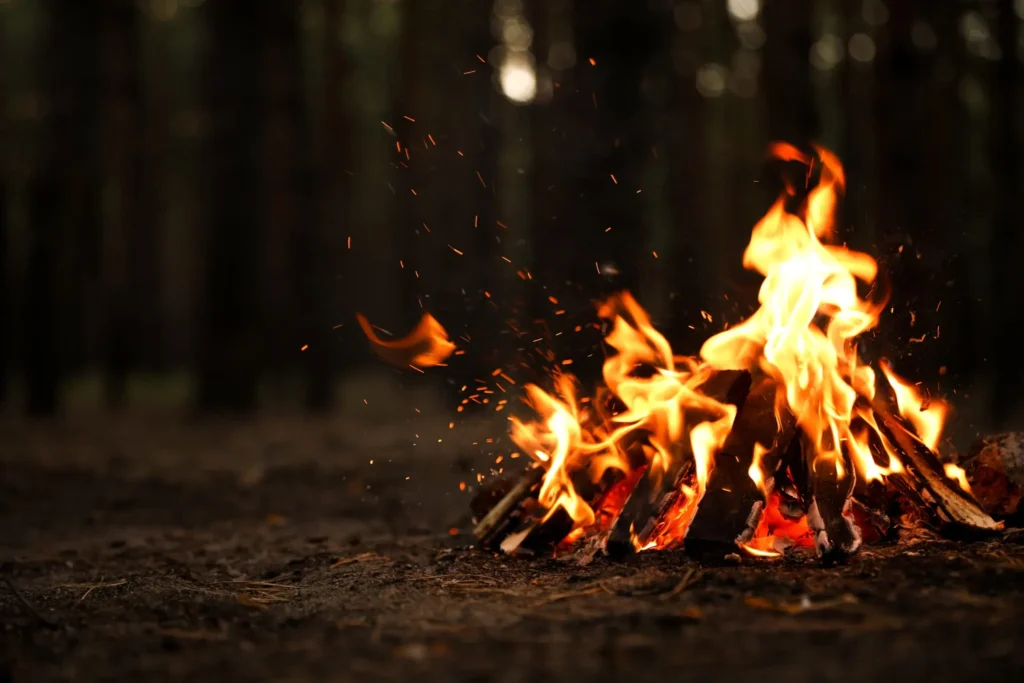
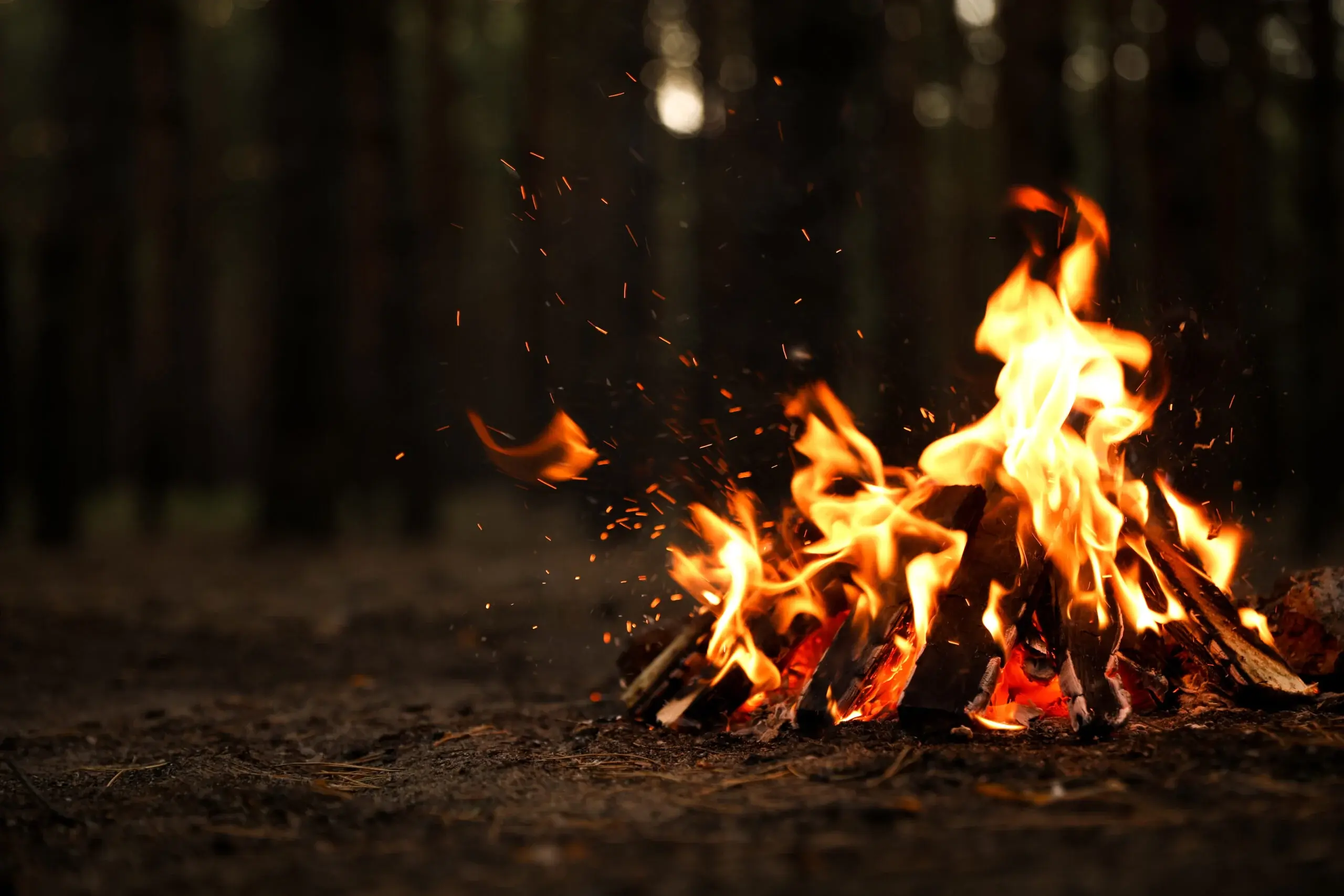
Few things make a campsite feel like camp quite like a small, well-tended fire. It warms chilly evenings, turns dinner into an occasion, and gives everyone a reason to linger a little longer under the stars.
The best campfire is not the biggest one. It is easy to control, built in the right place, and completely cold before anyone turns in for the night.
Start with the rules—and the right spot
Before gathering wood, check the current fire rules for your campground, park, or property. Burn bans, wind conditions, and site-specific restrictions can change quickly. If fires are not allowed, save the marshmallows for another night and use a camp stove or cozy layers instead.
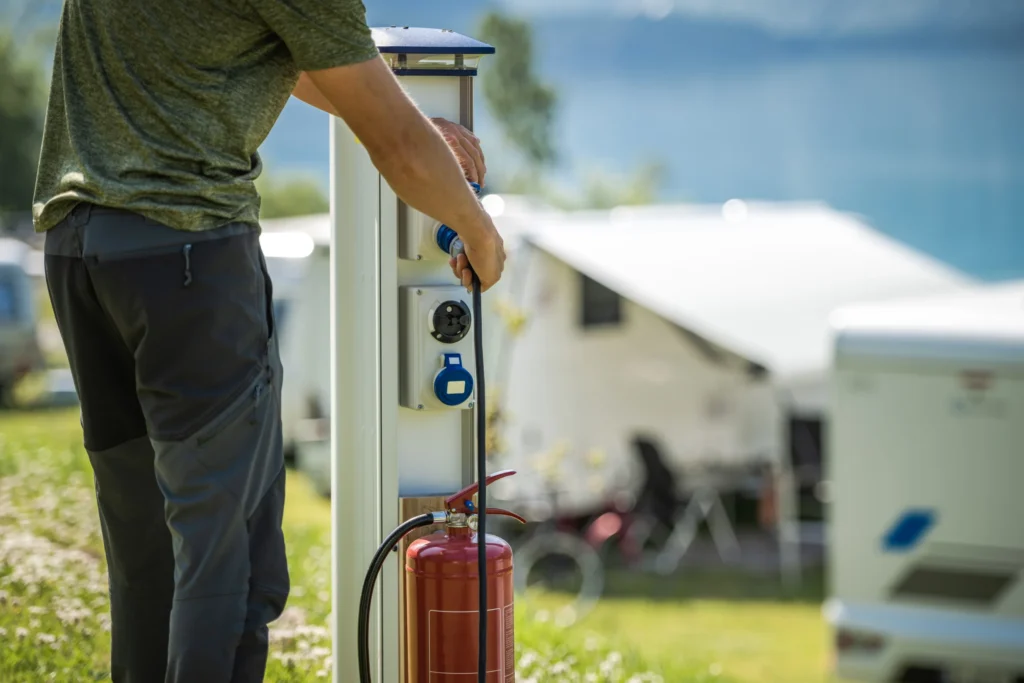
When fires are permitted, use an existing fire ring or designated fire pit whenever possible. Keep your fire well away from tents, vehicles, dry grass, brush, low branches, and anything that could catch a spark. Have a bucket of water and a shovel nearby before you strike a match.
Gather three sizes of fuel
A dependable campfire needs three things:
- Tinder: Dry leaves, grass, wood shavings, or a fire starter—small material that catches quickly.
- Kindling: Pencil- to finger-sized dry twigs that help the flame grow.
- Firewood: Seasoned pieces of wood that will burn steadily once the fire is established.
Use local or campground-supplied firewood. Moving firewood from home can spread invasive insects and diseases to new places. And skip the tempting “fuel” like trash, plastics, cans, or treated lumber; they can release harmful fumes and leave behind a mess.
Build a simple teepee fire
For most campfires, the teepee method is an easy place to start.
Place a small bundle of tinder in the center of the fire ring. Arrange kindling around it in a loose cone, leaving enough space for air to move through. Add a few small pieces of firewood around the outside, but do not stack so much that the fire cannot breathe.
Light the tinder at the base. Once the kindling is burning steadily, add one or two pieces of larger firewood at a time. The goal is a modest, manageable flame—not a bonfire. A small fire is warmer up close, easier to cook over, and far easier to put out safely.
Tend it, don’t abandon it
A campfire needs an attentive host. Stay with it at all times, keep children and pets at a safe distance, and never toss in extra wood “just because.” Wind can change quickly, and even a small ember can travel farther than expected.
When you are finished cooking or visiting, stop adding wood early. Let the larger pieces burn down to coals while you are still awake and ready to tend the fire.
Put it out: drown, stir, feel
A fire is not out when the flames disappear. Coals can hold heat for hours—and can flare up again in the wind.
When it is time to extinguish your fire:
- Slowly pour plenty of water over the coals, ashes, and partially burned wood. Avoid dumping it all at once, which can create a burst of hot steam and ash.
- Stir everything with a shovel or sturdy stick, breaking apart any remaining charred pieces.
- Add more water and stir again until every ember is wet.
- Carefully hold the back of your hand near the ashes to check for heat. If you feel any warmth at all, add more water and repeat.
The final test is simple: the ashes should be cold to the touch. Do not bury hot coals; covering them can trap heat and allow them to smolder underground.
A perfect campfire leaves behind no worries—just the glow of a good evening, a clean fire ring, and a campsite ready for the next visitor.
For current restrictions and emergency guidance, check with your campground, local fire authority, or park staff before lighting a fire. The “drown, stir, feel” method is recommended by the National Park Service and U.S. Forest Service.